Advertisements
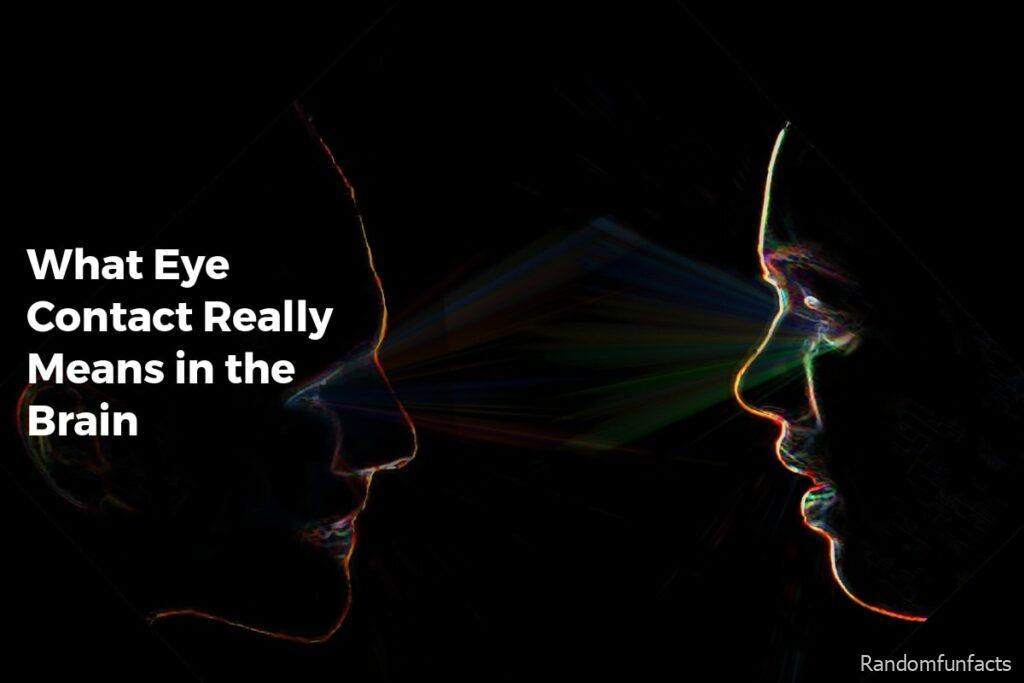
Eye contact feels simple. Two people look at each other, and something quietly shifts. It can feel comforting, intense, awkward, or electric—all without a single word exchanged.
Behind that moment is a dense web of brain activity that evolved long before language. What looks like a social habit is actually a full-body signal, interpreted in milliseconds.
Table of Contents
(Click to Toggle)
- 1. Eye Contact as a Threat Detector
- 2. Eye Contact and Trust Signals
- 3. The Amygdala’s Rapid Judgments
- 4. Mirror Neurons and Shared Attention
- 5. Why Eye Contact Feels Intimate
- 6. Cultural Differences in Gaze Processing
- 7. Eye Contact and Dopamine Release
- 8. Autism and Gaze Sensitivity
- 9. Social Anxiety and Overinterpretation
- 10. Eye Contact in Infancy
- 11. The Role of the Prefrontal Cortex
- 12. Eye Contact and Memory Encoding
- 13. Power Dynamics and Gaze
- 14. Digital Eye Contact vs Real Eye Contact
- 15. When Avoiding Eye Contact Is Protective
Why “What Eye Contact Really Means in the Brain” is worth your time
They reveal hidden systems: Eye contact feels emotional, but it is deeply mechanical. Understanding the brain systems involved makes everyday interactions easier to decode.
They explain discomfort: Moments of awkwardness or intensity often come from ancient neural circuits doing exactly what they were designed to do.
They humanize behavior: What looks like confidence or avoidance is often biology responding faster than thought.
The Brain’s Shortcut for Social Meaning
Eye contact is one of the fastest ways the brain decides whether a situation is safe, relevant, or demanding attention. It bypasses slow reasoning and activates emotional processing almost instantly.
1. Eye Contact as a Threat Detector
What it is:
The brain treats direct gaze as a potential signal of danger or challenge.
Category:
Survival Response
Why it stands out:
- Direct gaze activates threat circuits faster than facial expressions
- Evolution favored rapid interpretation of being watched
- Misreading gaze once was safer than ignoring it
Best for:
Understanding why staring can feel uncomfortable.
2. Eye Contact and Trust Signals
What it is:
Eye contact helps the brain assess honesty and social intent.
Category:
Social Evaluation
Why it stands out:
- Consistent gaze increases perceived reliability
- Avoided gaze can trigger suspicion
- The brain links eyes with intention
Best for:
Making sense of first impressions.
3. The Amygdala’s Rapid Judgments
What it is:
The amygdala evaluates eye contact before conscious thought.
Category:
Emotional Processing
Why it stands out:
- Responds within milliseconds
- Strongly reactive to direct gaze
- Heightens emotional memory
Best for:
Explaining instinctive reactions.
4. Mirror Neurons and Shared Attention
What it is:
Eye contact synchronizes attention between people.
Category:
Social Cognition
Why it stands out:
- Promotes emotional alignment
- Enhances communication efficiency
- Creates a sense of being “seen”
Best for:
Understanding connection without words.
5. Why Eye Contact Feels Intimate
What it is:
Prolonged gaze activates bonding circuits.
Category:
Attachment Biology
Why it stands out:
- Linked to oxytocin release
- Reduces psychological distance
- Amplifies emotional meaning
Best for:
Recognizing emotional closeness.

Advertisements
6. Cultural Differences in Gaze Processing
What it is:
The brain adapts gaze interpretation based on norms.
Category:
Cultural Neuroscience
Why it stands out:
- Learned expectations shape comfort levels
- Same gaze can mean respect or challenge
- Context rewires interpretation
Best for:
Avoiding social misreads.
7. Eye Contact and Dopamine Release
What it is:
Mutual gaze can activate reward pathways.
Category:
Motivation
Why it stands out:
- Encourages social engagement
- Reinforces positive interactions
- Makes attention feel rewarding
Best for:
Understanding attraction.
8. Autism and Gaze Sensitivity
What it is:
Eye contact can be overwhelming rather than informative.
Category:
Neurodiversity
Why it stands out:
- Heightened sensory processing
- Different neural prioritization
- Not a lack of social interest
Best for:
Building empathy.
9. Social Anxiety and Overinterpretation
What it is:
The brain reads too much into gaze.
Category:
Anxiety Response
Why it stands out:
- Threat circuits dominate perception
- Neutral gaze feels critical
- Attention becomes self-focused
Best for:
Understanding discomfort in crowds.
10. Eye Contact in Infancy
What it is:
Babies use eye contact to wire social circuits.
Category:
Development
Why it stands out:
- Guides language learning
- Builds emotional security
- Shapes future social skills
Best for:
Understanding early bonding.

11. The Role of the Prefrontal Cortex
What it is:
Higher reasoning moderates gaze reactions.
Category:
Cognitive Control
Why it stands out:
- Helps override instinctive responses
- Supports social flexibility
- Balances emotion and logic
Best for:
Managing social situations.
12. Eye Contact and Memory Encoding
What it is:
Gaze increases memory strength.
Category:
Learning
Why it stands out:
- Enhances attention
- Improves recall of faces
- Links emotion to memory
Best for:
Understanding why moments stick.
13. Power Dynamics and Gaze
What it is:
Eye contact signals dominance or submission.
Category:
Social Hierarchy
Why it stands out:
- Longer gaze often signals confidence
- Avoidance can reduce conflict
- Context changes interpretation
Best for:
Reading social dynamics.
14. Digital Eye Contact vs Real Eye Contact
What it is:
Screens disrupt natural gaze cues.
Category:
Modern Interaction
Why it stands out:
- Camera placement alters perception
- Brain receives mixed signals
- Reduces emotional intensity
Best for:
Explaining online fatigue.
15. When Avoiding Eye Contact Is Protective
What it is:
Looking away can regulate emotion.
Category:
Self-Regulation
Why it stands out:
- Reduces sensory load
- Prevents emotional escalation
- Supports cognitive processing
Best for:
Understanding coping behaviors.
Bonus Mentions
Joint Attention
A shared focus that builds cooperation and learning.
Gaze Aversion
A natural strategy for thinking and emotional control.
Facial Processing Networks
Specialized brain areas devoted to reading faces.
Final Verdict: Is it worth it?
Eye contact is not just politeness or confidence. It is a dense signal shaped by evolution, culture, and individual wiring.
Many of the most powerful tools for connection are invisible, operating quietly beneath awareness. They do not announce themselves or demand attention.
In a world full of noise, these subtle systems remind us that meaning often lives in the smallest moments we barely notice.
Advertisements